What Local Governments Can Take Into 2027: Five Lessons on AI Adoption

Table of contents
Lessons from the final Technology Foresight Council session of 2026 on defining problems, building trust, and strengthening human judgment.
A successful AI project can resolve inquiries faster or free up staff time. Its lasting value also depends on what happens afterward. Can other departments build on it? Do residents trust it? Are staff better equipped to serve their communities?
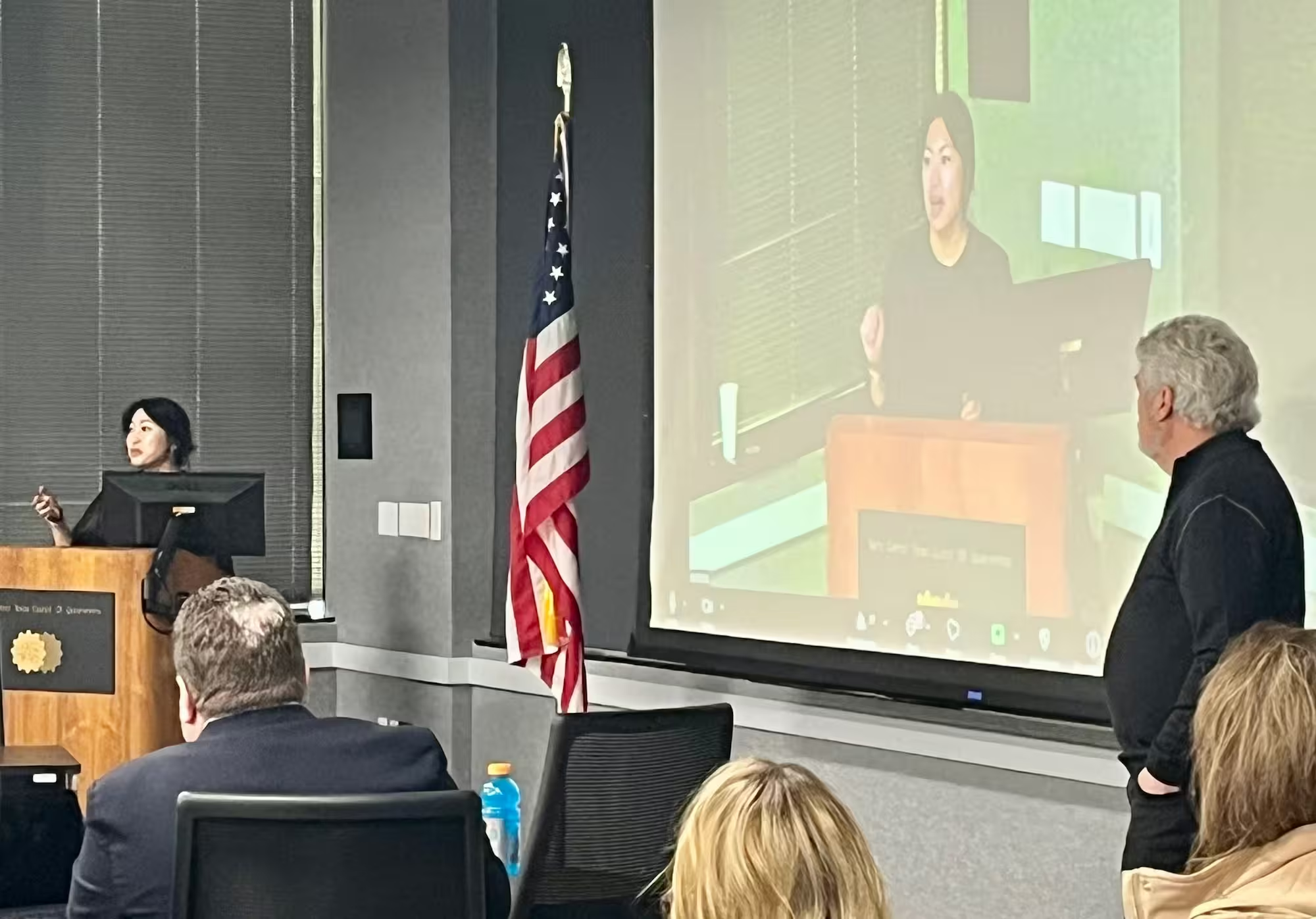
Those questions connected the research, implementation experience, and foresight shared at the final Technology Foresight Council session of 2026, hosted by TXShare and Civic Marketplace. Here are five lessons local government leaders can apply as they prepare for the year ahead.
1. Define the problem before making a technology decision
A request for a new system may point to a process or communication problem that technology alone cannot resolve.
Nick Lyell, COO and Co-Founder of CivStart, shared an example of a town that believed its land-use rules conflicted with the county’s. Further investigation revealed that updates were failing to reach the county building office. The underlying issue was communication.
That pattern surfaced in CivStart’s research, which drew on 58 sessions with leaders from 53 cities across 26 states. These qualitative conversations repeatedly revealed a gap between the challenge initially presented and its root cause.
As Nick explained:
Put it into practice. Lead with the outcome you want, such as lower fleet maintenance costs. Before evaluating technology, establish what is happening, who is affected, and how you’ll recognize a better outcome. Break broad priorities into specific challenges that a team can realistically address.
Clarity is a free tool from CivStart that helps public-sector leaders define a problem, learn how peer governments have approached it, and identify possible next steps. Explore Clarity at civstart.com.
2. Let demonstrated value guide expansion
A focused project gives an agency something concrete to evaluate, and other departments get a working example they can learn from.
In Mount Vernon, New York, the Buildings Department’s Readyly AI assistant has moved from pilot to production and integrates with the city’s OpenGov platform. Juan Perez, Commissioner of Management Services and CIO, reported a first-contact resolution rate above 96% in the week before the session. That means the assistant resolved nearly all resident interactions it handled that week without staff involvement, freeing up staff time for other needs.
Interest spread through staff conversations and positive feedback from residents. Work on scheduling functionality opened discussions with the Clerk’s Office and later with the Veterans Department.
Juan emphasized that costs can rise as usage grows, making it important to weigh the case for expansion department by department.
Put it into practice. Use a defined project to measure results, understand costs, and gather staff and resident feedback. Expand where another department has a clear need and the solution has demonstrated a practical fit.
3. Build organizational capacity alongside the technology
AI adoption creates responsibilities that extend beyond the team running a pilot.
CivStart’s research highlighted agencies working to coordinate tools across departments while IT teams faced growing demand. Because agencies typically fund IT as overhead, adding staff or services rarely brings a corresponding increase in the IT budget. Fragmented purchasing and informal workarounds can compound that pressure.
AI can also enter an organization through existing suppliers. Nick described one agency that includes an AI addendum in every vendor contract, addressing privacy, bias, transparency, and liability.
Put it into practice. Establish who evaluates use cases, what data a system can access, and who supports it after implementation. Make it easy for departments to share lessons and understand the review process. Ask existing suppliers how they’re introducing AI into their services.
4. Make human review meaningful
A human approval step only works when the reviewer can exercise judgment.
Rony Yuria, Co-Founder of Pharos Futures Research Group, helped establish Google’s policy foresight function. She distinguished between involving people in a process, giving them oversight, and helping them develop the judgment to challenge a recommendation. Asking someone to review a hundred recommendations a day, she noted, invites rubber-stamping.
That judgment matters when circumstances fall outside established categories. A resident may need support in an unusual situation, or a proposed building design may raise questions that existing permitting rules never anticipated. Recognizing when a standard answer deserves closer examination helps agencies respond to those cases and learn from them.
Put it into practice. Define the role people should play before you procure. Identify the decisions where human judgment matters most and give reviewers the information, time, and authority to question an output. Give residents meaningful ways to challenge outcomes. Consider how staff entering an AI-enabled workplace will develop independent expertise.
5. Buy for the institution you want to become
Rony asked leaders to consider how the AI tools they buy today could shape their institutions over time.
Her thought experiment imagined two cities in 2035 with equally advanced AI. One required residents to fit automated categories. The other used technology to help people exercise judgment, address exceptions, and improve the rules themselves.
Procurement can help determine which direction an agency takes. Alongside speed, accuracy, and cost, Rony encouraged leaders to ask:
- Can staff recognize when the AI is wrong?
- Does the system help people develop independent judgment?
- Can residents and staff challenge decisions and assumptions?
- Can the institution learn from exceptions and appeals?
Put it into practice. Turn these questions into evaluation criteria, acceptance tests, and ongoing performance measures. Assess whether a system helps the agency deliver effective services and adapt when circumstances change.
As Jonathan Blackman of TXShare at NCTCOG emphasized in closing, public agencies need both efficiency and effectiveness. A faster process is valuable when it also serves the people who depend on it.
Continue the conversation at the 2027 AI Unconference, January 19–21 at the Hurst Conference Center in Hurst, Texas. Watch live AI demos, ask providers how their tools could address a challenge your agency is working through, and compare notes with other local government leaders. If you’re still defining the problem you want to solve, start with CivStart’s free Clarity tool.