
A Better Way to Buy: What Civic Marketplace 2.0 Makes Possible

Local governments are under more pressure than ever. Budgets are tighter, federal funding is being withdrawn, and every city manager and procurement director I speak to is asking the same thing of their purchasing decision-makers: find savings, and do more with less.
The problem is that those same decision-makers are already stretched thin. They're fighting fires every day, chasing down contracts, navigating fragmented vendor lists, managing compliance, when what they should be doing is driving strategic value for their communities.
That's the reality we built Civic Marketplace 2.0 for.
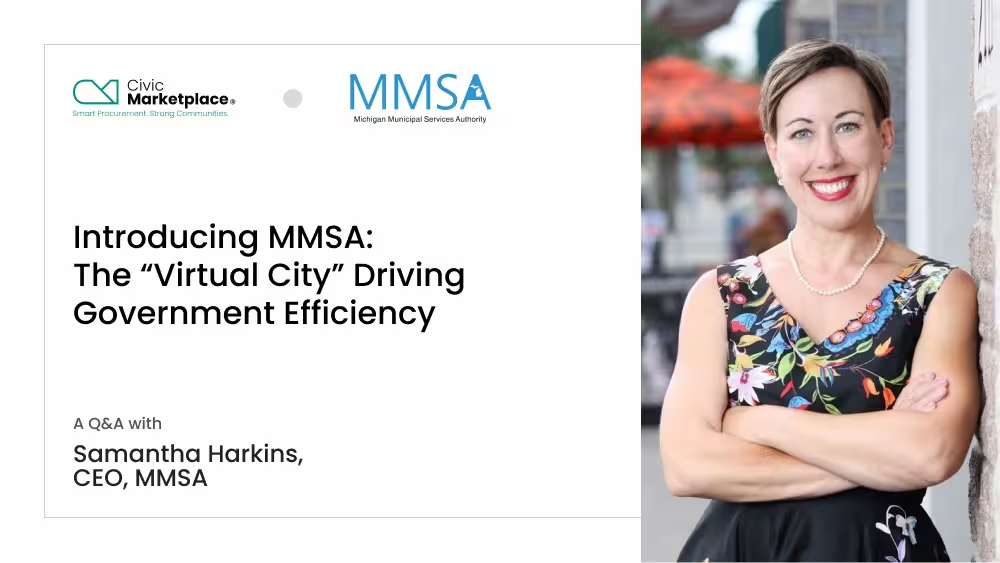
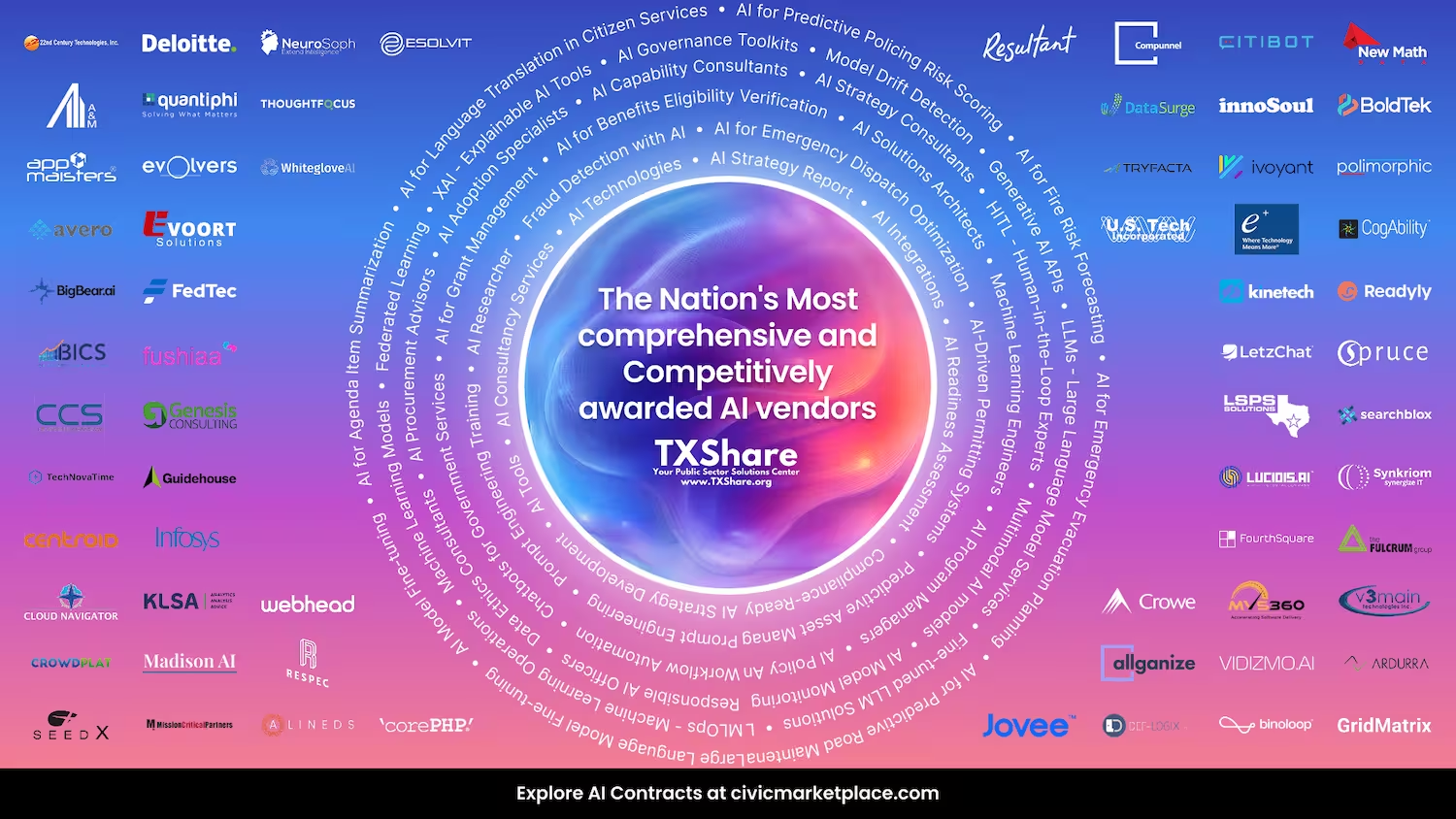
This launch came from listening to the entities and cooperatives we work with. Partners like the the City of Denton, City of Brownsville, City of Dallas, Michigan Municipal Services Authority, TXShare and the North Central Texas Council of Governments, COGWORKS and the East Texas Council of Governments have been genuine co-designers of what this platform has become. This is as much their platform as it is ours.
What we heard, again and again from the very beginning, was that discovery alone is not enough. The original platform gave procurement professionals a place to find cooperative contracts and explore suppliers. That mattered. But what they really need is something that can take them all the way from discovery to award, faster, more compliantly, and with far less manual effort. That shift from top-of-funnel exploration to full workflow execution is what 2.0 is fundamentally about.
The platform rests on three pillars. First, a shared library of cooperative contracts, competitively awarded by cities, counties, leading cooperatives and other public entities, so procurement teams aren't starting from scratch every time. Second, Quick Quotes and Bake Off: a fast, auditable way to gather and compare supplier proposals in one place, with the documentation to prove it was done properly. Third, local business enablement, giving smaller and locally-owned suppliers real visibility into opportunities they'd previously struggled to reach, and giving entities a compliant pathway to spend within their own communities.
Together, these three pillars are coming together in the platform to deliver incredible results. We recently worked with an entity evaluating 118 proposals, a process that would have taken six months. We brought that down to weeks, a 90%+ reduction in procurement lifecycle time from quote to award. When you remove months of admin burden from a procurement officer's year, you give them something back: the space to do strategic work. To think about how their purchasing decisions strengthen the local economy, support historically underutilized businesses, and move their city forward.
And 2.0 is just one step on our journey.
The issue we hear about constantly is fragmentation: fragmented vendors, fragmented contracts, fragmented data. Civic Marketplace is designed to be the connective tissue that standardizes all of that, giving every public entity a single trusted place to manage the full procurement workflow. In the near future, that will include agentic AI that handles routine quote-gathering and compliance checks autonomously, freeing procurement professionals to focus on the decisions only they can make.
The video below shows you what the new platform can do. What you're seeing is a step in a much longer journey toward a future where the administrative burden of public procurement is largely automated and compliance is built in from the start.

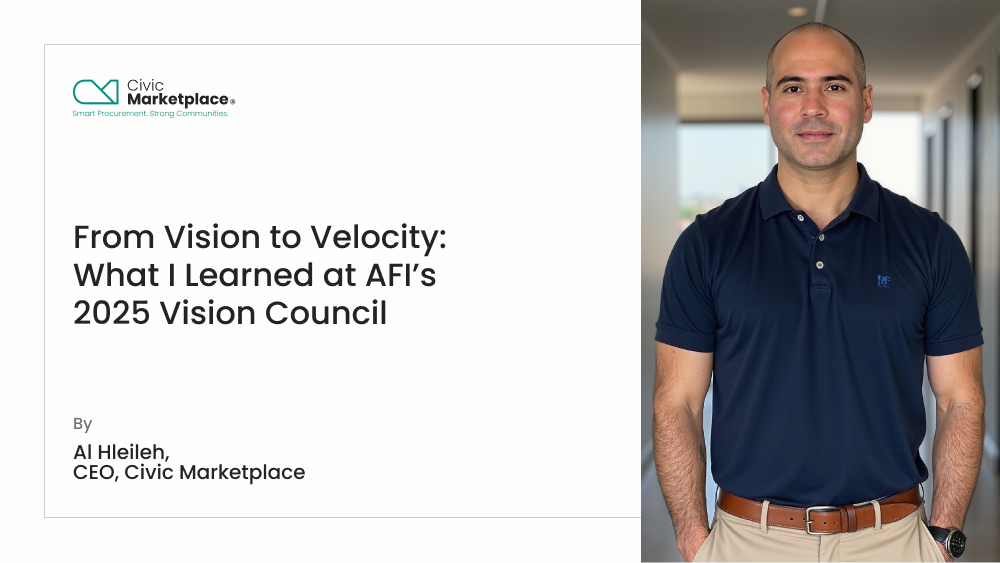
Al Hleileh is a visionary entrepreneur, civic innovator, and the Co-Founder & CEO of Civic Marketplace. A two-time founder with a proven track record of scaling mission-driven ventures, Al blends strategic foresight with relentless execution to drive impact at scale.
.avif)







.avif)

.avif)