

Recently, during a Civic Marketplace and Edge Public field visit to one of our partner’s – Batteries Plus – headquarters with our friends Scott Ruhl and Brandon Boozer, we were struck by more than innovation alone. Yes, the systems were impressive and the supply chain was dialed in, but what stood out most was the intentionality behind the work. Thoughtfulness. Service. A clear commitment to doing things the right way, not just the fast way.
We know folks don’t think about batteries until they absolutely have to; it’s little known how important these small components are to cities’ most essential operations. And as expectations for emergency preparedness, digital services and seamless operations grow, batteries are becoming a strategic asset rather than a commodity purchase. Cultivating that intentionality behind procuring them becomes critical.
The average municipality spends around $3 per resident per year on batteries. That means a city of one million people is likely investing $3 million annually – spread across systems such as public safety tools, traffic networks and water facilities. But because this spend is fragmented, it’s easy for the true scale of the cost to stay invisible.
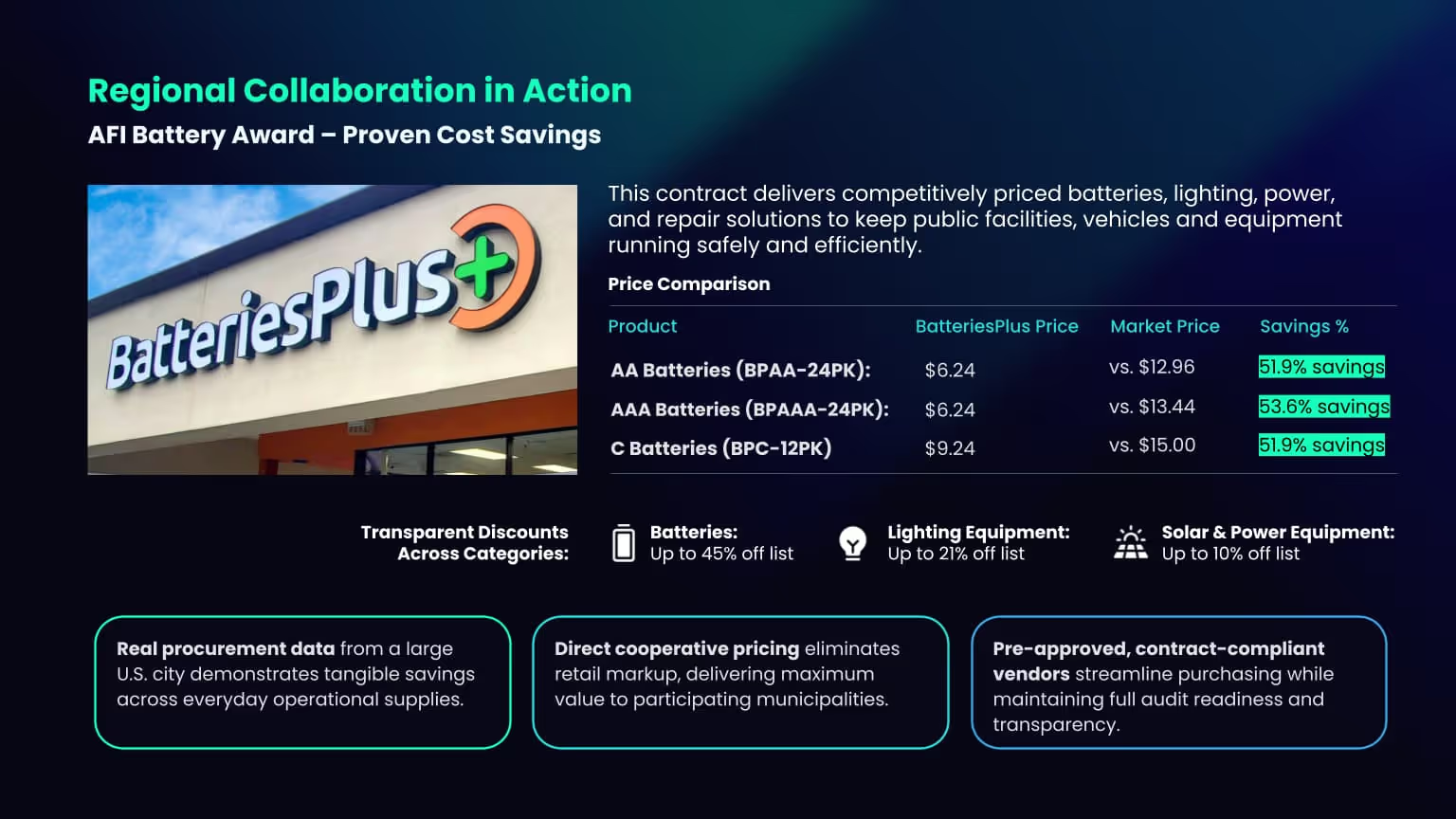
When governments step back and connect the full picture, they will find opportunities to better serve citizens by moving battery procurement from reactive to resilient, and to free up tax dollars in the process. When proactivity can lead to cost savings of at least 30% compared to purchasing through Amazon, it becomes not only procurement responsibility, but a critical pathway to achieving savings on both the private and public side.
Powering public services behind the scenes
Every department relies on dependable, uninterrupted power.
- Public safety teams need it for their radios, cameras, emergency lighting, and field equipment.
- Traffic operations depend on battery-backed control systems to keep intersections running safely.
- Water and wastewater teams use battery-supported Supervisory Control and Data Acquisition (SCADA) units to manage valves and pump stations, preventing contamination during outages.
- Facilities and fleet teams’ equipment, signage and vehicles rely on a stable battery supply.
It’s easy to take these systems for granted, but together they form the backbone of daily city operations. When one fails, the overall ecosystem is at risk. Being proactive about power keeps essential services connected and communities safe.
During a crisis, these dependencies converge. In Florida, for instance, hurricanes can knock out power for days, and cities must keep traffic flowing for evacuations, maintain water systems to prevent contamination during heavy rainfall, and ensure emergency services can communicate and act swiftly, all on limited backup power. The ability to keep those systems running simultaneously turns a disaster plan into an effective emergency response.
A procurement opportunity hiding in plain sight
Local government procurement teams balance compliance, cost stewardship, and service continuity every day. Battery purchasing touches all three.
In practice, batteries are often bought when something fails, and speed and convenience are the priority, leading to costly gaps in service when supply runs short. Over time, this approach leads to fragmented purchasing, inconsistent pricing, and higher overall spend – particularly during emergencies, when entities are forced to buy at whatever price is available.
Part of the problem is where these purchases originate. Batteries bought through generic suppliers such as office or consumer channels often carry hidden markups from multiple layers of procurement and distribution. Cities end up paying for convenience, rather than capability. Buying directly from a specialist provider grants access to wholesale pricing, a better product fit, and a reliable supply designed for government use.
That’s why many procurement teams are now shifting gears. By aggregating demand, improving visibility across departments and putting contracts in place, they stabilize the supply and avoid paying a premium in an emergency. The result is better pricing and, most importantly, improved operational resilience for the residents who depend on these systems every day.
Strategic partnerships help governments go further
This is why choosing the right supplier is essential for local governments to be able to deliver reliable, effective services.
Batteries Plus, for example, has been working with governments since 1988; its teams understand the specific documentation, audit needs, and compliance standards entities must meet. While its national warehouse network supports high availability, its locally owned store franchises keep local government spending circulating in the community.
Crucially, Batteries Plus helps teams right-size their solutions, guiding entities toward long-life options where maintenance is costly or high-risk. The company’s service also includes EPA-certified recycling, reducing the administrative burden on procurement professionals.
Smart procurement keeps communities running
The systems that batteries underpin have vast implications if they fail. When local governments start thinking strategically about how they purchase them, they create better outcomes for the communities they serve.
Purchasing through legally compliant, competitively awarded cooperative contracts fast-tracks and removes friction from the procurement process, giving leaders more time to focus on resident outcomes.
The Batteries, Power, Lighting and Solutions cooperative contract is competitively solicited and awarded under AFI RFP-2025-103, administered by Edge Public. Through the contract, entities can access significant discounts such as up to 45% off batteries, up to 21% off lighting equipment and up to 10% off solar and power equipment.
Now available on Civic Marketplace, this contract allows entities to purchase from a pre-vetted supplier without running a new RFP or gathering multiple quotes.

Al Hleileh is a visionary entrepreneur, civic innovator, and the Co-Founder & CEO of Civic Marketplace. A two-time founder with a proven track record of scaling mission-driven ventures, Al blends strategic foresight with relentless execution to drive impact at scale.
View the Coop Contract
Check out this contract and the supplier on Civic Marketplace.




.avif)











.avif)





.avif)