

Procurement isn’t a shopping problem
Agency leaders overseeing procurement often believe the core challenge is discovery. If staff can access enough suppliers, cooperative contracts, or product options, then the rest of the process will take care of itself.
That is a catalog mindset. It treats procurement as the process of selecting a product or service from a set of available options, rather than an end-to-end strategic process that runs from defining a need through to supplier engagement, compliance, pricing, final decision-making, and delivery.
Procurement decision-makers in local governments don't need more portals or lists – they have plenty of those. They need a better way to act on procurement opportunities without adding staff burden or increasing risk.
A catalog-style approach has its place for simple, repeatable purchases and can provide speed and convenience. If the purchase is more complex, however, procurement isn’t as simple as picking from a catalog.
Agencies are bound by statutes, internal controls, departmental requirements, and budget constraints. Purchasing staff need to work out whether a contract or supplier fits their need, whether it's legally usable, the pricing is competitive, and whether suppliers will even respond. Often, procurement decision-makers become full-time internal consultants for every purchase: researching options, assessing fit, and helping internal stakeholders understand what is usable, compliant, and practical.
In many local governments, this work is not always led by certified procurement professionals. It often sits with department staff, administrative teams, or operational leaders who are balancing procurement alongside their primary responsibilities.
The people doing the work are time-poor and are being asked to navigate a complex process without the capacity or specialization to do so consistently. A catalog may show them what exists, but they are left to manage the harder parts alone. That is often where projects slow down, confidence drops, and decisions become harder to make.
More options does not equal better decisions
The catalog mindset usually comes from a practical place. When teams are stretched, leaders look for ways to reduce friction and keep work moving. More options and easier access can feel like the fastest route to progress.
But speed at the discovery stage does not always create speed across the whole process. If teams still have to spend weeks validating options, clarifying requirements, and working out what they can use, the bottleneck has only moved.
One procurement manager told me it takes their team around three months to move from an initial idea to an active procurement process. By the time they are formally engaging with suppliers, most of the key decisions have already been made, with little room to adapt or refine the approach.
To work around that rigid process, folks try to solve the problem in advance of formal tender requests. They spend weeks, even months, speaking to suppliers informally, testing options, and narrowing down what might work before procurement formally begins. But that means what should be a three-month process has already become five, or more!
Bring procurement thinking in earlier
Procurement is still often treated as an administrative function, something that sits within finance and is brought in at the end of a process to execute a decision.
There was a time when IT was viewed the same way, several layers down in the organization. Today, it has a seat at the executive table because of how critical it is to outcomes. Procurement has not fully made that shift yet, but it should. Too often, the process still looks like this: a department defines the solution, and procurement is told at the end, “go buy this.” The opportunity is to bring procurement in earlier, not just to run the process, but to help shape the solution itself.
For example, at a recent Technology Foresight Council event, Juan Perez, the City of Mount Vernon’s Commissioner of Management Services, shared how the key procurement question that shaped an AI pilot project was not simply ‘which ready-made AI tool should we buy?’ but ‘which solution can integrate with the systems we already depend on?’ By surfacing that requirement early, the city narrowed the field, avoided a generic procurement exercise, and found a solution that could work in practice, which was tested in one team first before rolling it out to other departments.
Closing the gap between discovery and action
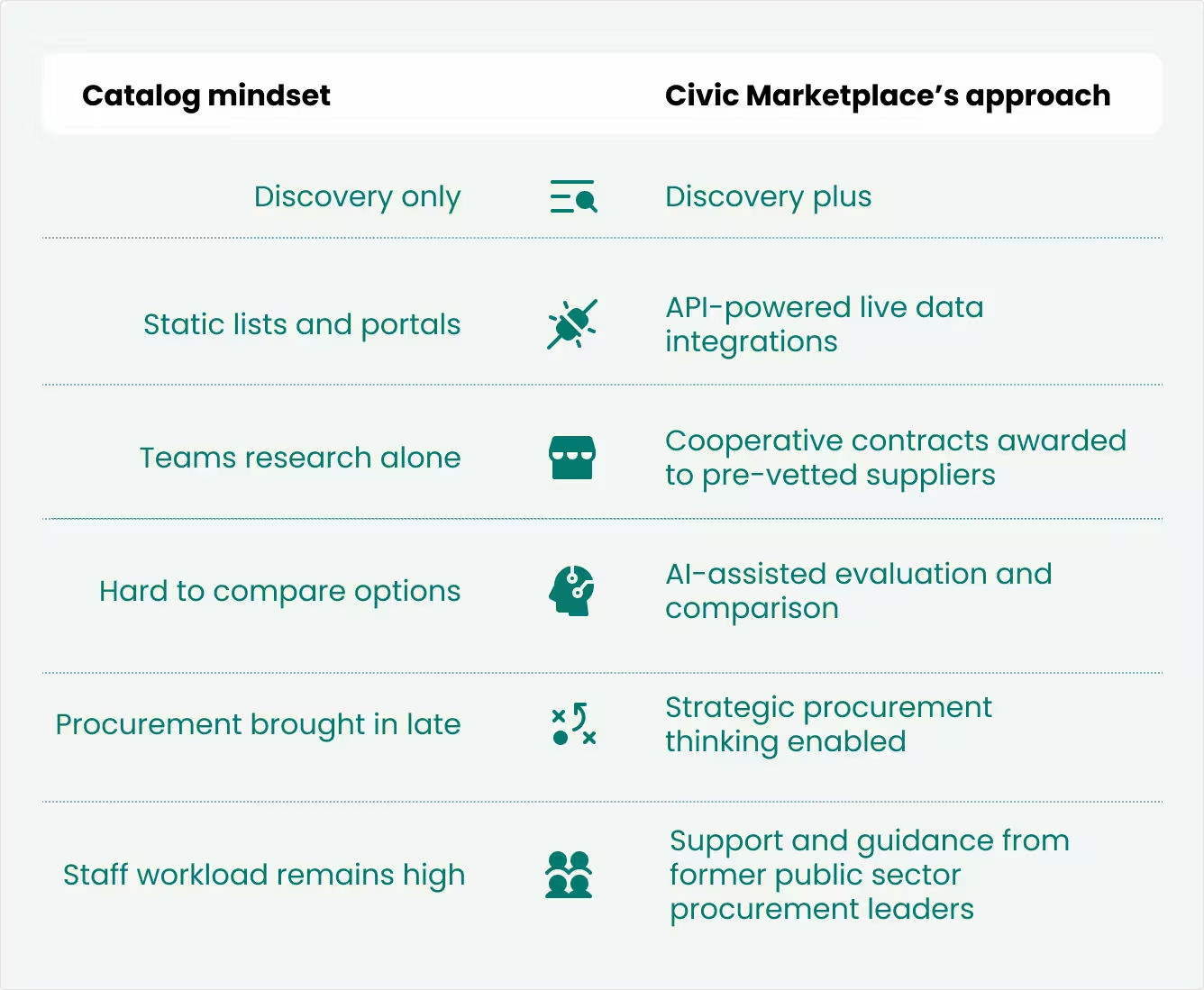
Civic Marketplace supports the procurement process by helping move agencies from discovery to action. Rather than presenting another static list of suppliers, the platform gives teams a more useful starting point: pre-vetted suppliers, with awarded cooperative contracts, AI tools to evaluate and compare products and services, and – if required – hands-on guidance from former public sector procurement leaders.
Instead of spending weeks on research, procurement teams can start with viable options and begin from a more informed position. They can ask practical questions, explore delivery models, receive multiple quotes, and refine requirements before making a decision. That level of engagement is often difficult to achieve in a catalog-led procurement process, where interactions need to remain at arm’s length until later stages.
To find out how Civic Marketplace can support more strategic procurement in your agency, book a call with one of our ex-public sector procurement leaders to guide you through the platform.

.avif)
Brian Funderburk, CPA, ICMA-CM, is a former City Manager, CFO, and Interim, and is a Certified Public Accountant. He was recognized as a Credentialed Manager in 2017 by the International City/County Management Association (ICMA). With a distinguished career in public administration and finance, Brian has demonstrated exceptional leadership and a commitment to excellence in city management.

.avif)







.avif)


.avif)