
Budgeting for AI: How local governments can avoid the token-pricing trap
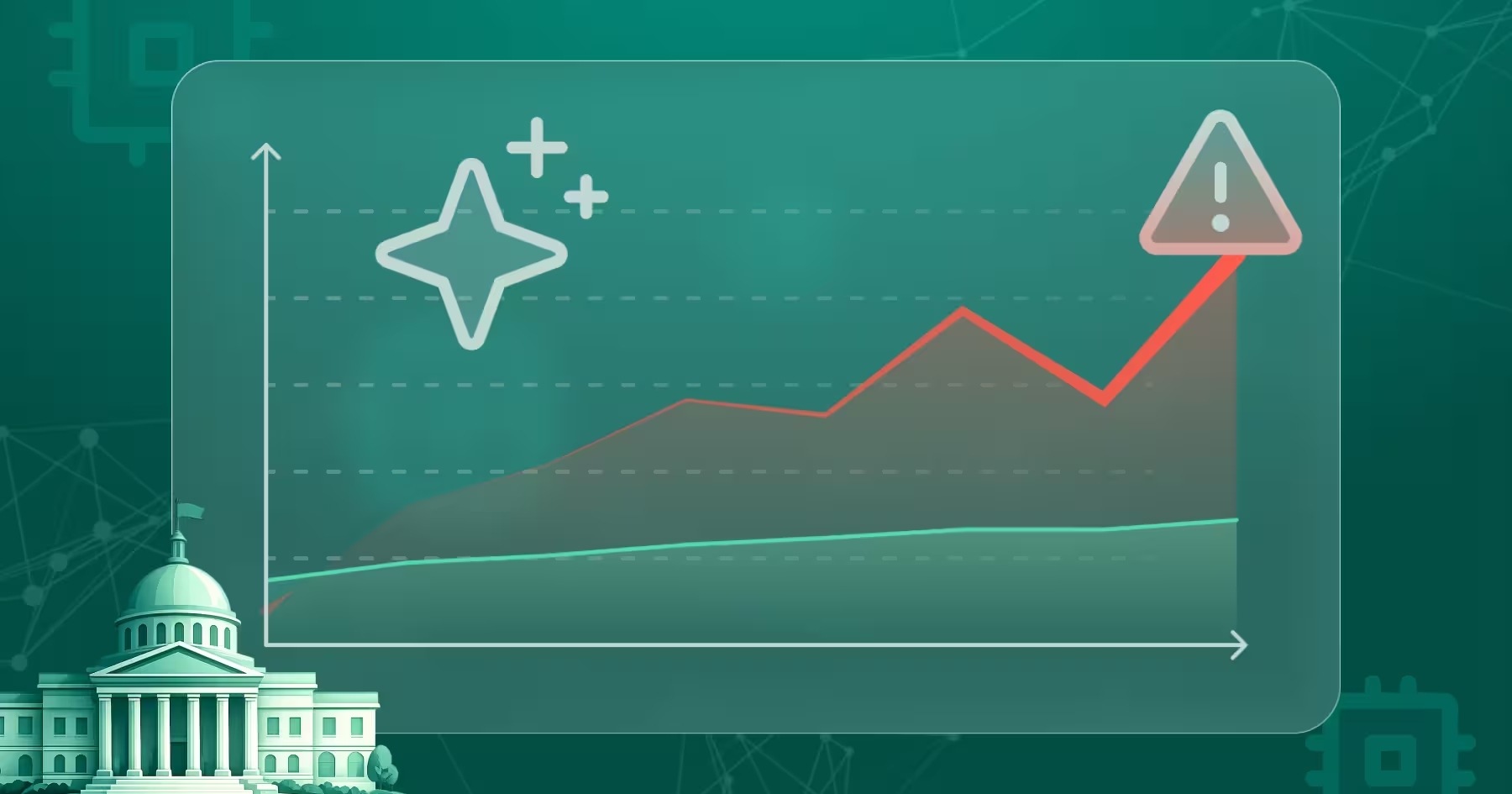
Table of contents
Most local governments build their budgets around a simple assumption: software costs the same every month. You buy a license for a fixed price, and you can write it into next year’s appropriation with confidence.
But AI tools are increasingly priced by usage rather than by seat, making budgeting much more complicated.
Instead of a flat annual fee, agencies pay for what the system processes, measured in tokens – small units of text an AI model reads and generates. The more your teams use a tool, the more it costs.
That’s a manageable trade-off if you’re a private company. For public entities working from fixed annual budgets, it becomes a forecasting problem.
The problem with usage-based pricing for the public sector
Token consumption is difficult to predict. It varies, sometimes, dramatically, depending on the task, department, workflow, and even which model an employee uses.
A single complex request can cost several times more than a routine one, and today’s agentic tools can act autonomously and consume far more than your average user typing questions into a chatbot.
Private enterprises are already feeling the squeeze. Finance leaders describe a consumption model where costs are inherently varied and forecast error grows as usage increases.
The public sector has less room for error. Budgets are set annually and approved in advance, and political budget cycles already force agencies to justify multi-year technology investments in 12-month increments. A surprise invoice isn’t something you can just pass onto internal accounting – overspend is public, and will be an on-the-record question at the next council meeting.
In a recent survey of 2,000 US public sector workers, 14% of respondents reported re-evaluating their AI investments due to budget, staffing, or other concerns, with 12% citing lack of ROI.
Cooperative purchasing offers a predictable path
How you buy matters as much as what you buy.
Cooperative contracts do the hard procurement work upfront. A lead agency competitively solicits a contract, negotiates the terms, and makes it available to other public entities, saving agencies from running their own RFP or negotiating pricing from scratch every time.
For AI specifically, pre-vetted contracts deliver the thing public budgets need most: clarity. Setting pricing, scope, and vendor terms before a single token is spent gives finance and procurement teams something firm to plan against.
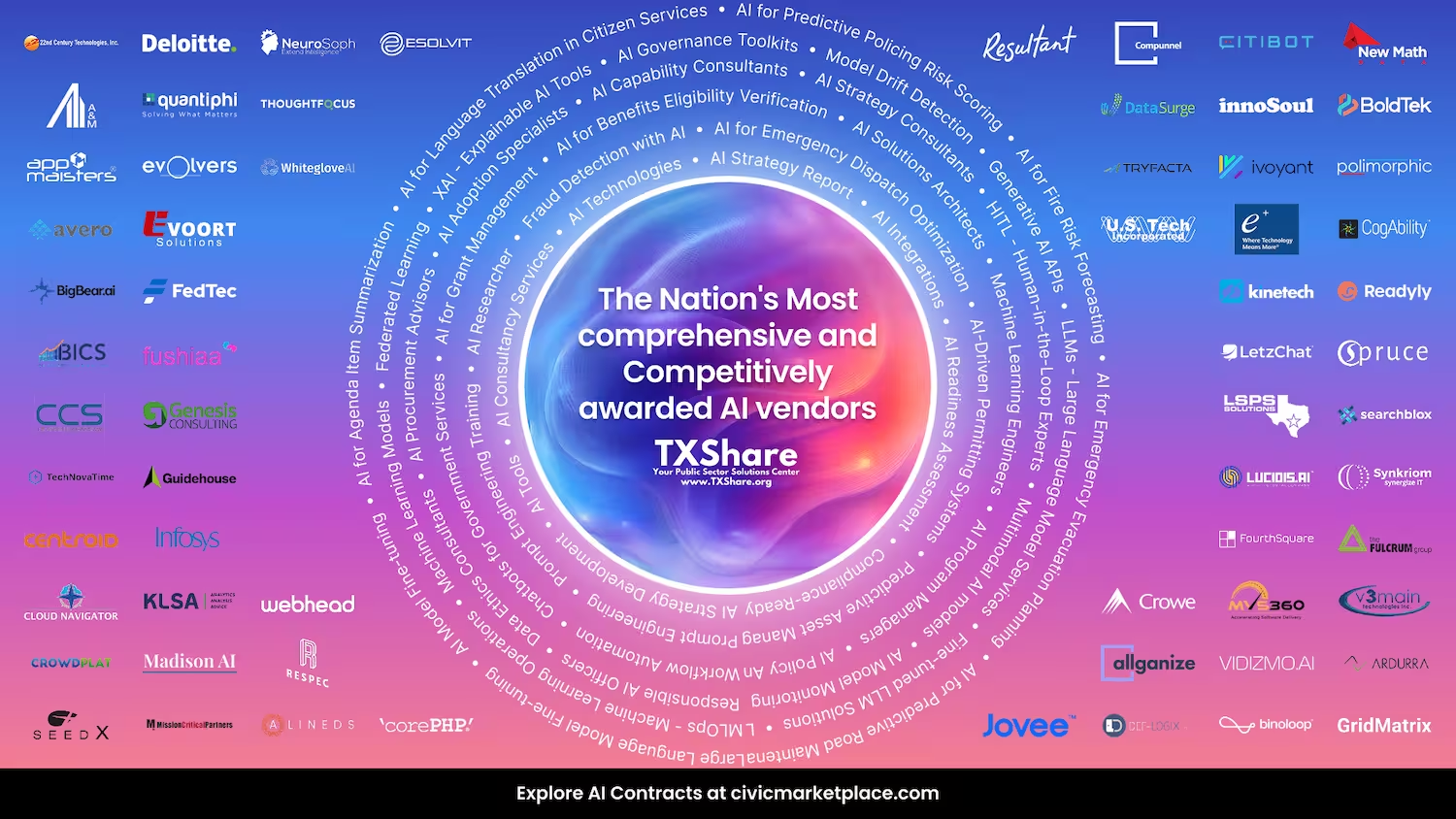
Civic Marketplace already offers competitively awarded cooperative contracts that give local governments access to vetted AI suppliers. From data and analytics tools to AI governance and compliance platforms, the contracts cover a wide range of use cases.
Responsible adoption starts at procurement
While private businesses race to bolt on AI, the public sector’s goal is to buy AI in a way that is transparent, budgetable, and compliant, so that entities can adopt new tools without taking on financial risk.
AI continues to develop rapidly, and pricing models will keep shifting. What local governments can control is the route through which they purchase – one that keeps.

Al Hleileh is a visionary entrepreneur, civic innovator, and the Co-Founder & CEO of Civic Marketplace. A two-time founder with a proven track record of scaling mission-driven ventures, Al blends strategic foresight with relentless execution to drive impact at scale.
View the Coop Contract
Check out this contract and the supplier on Civic Marketplace.

.avif)








.avif)


.avif)