
Technology Foresight Council: AI and Data Readiness for the Public Sector
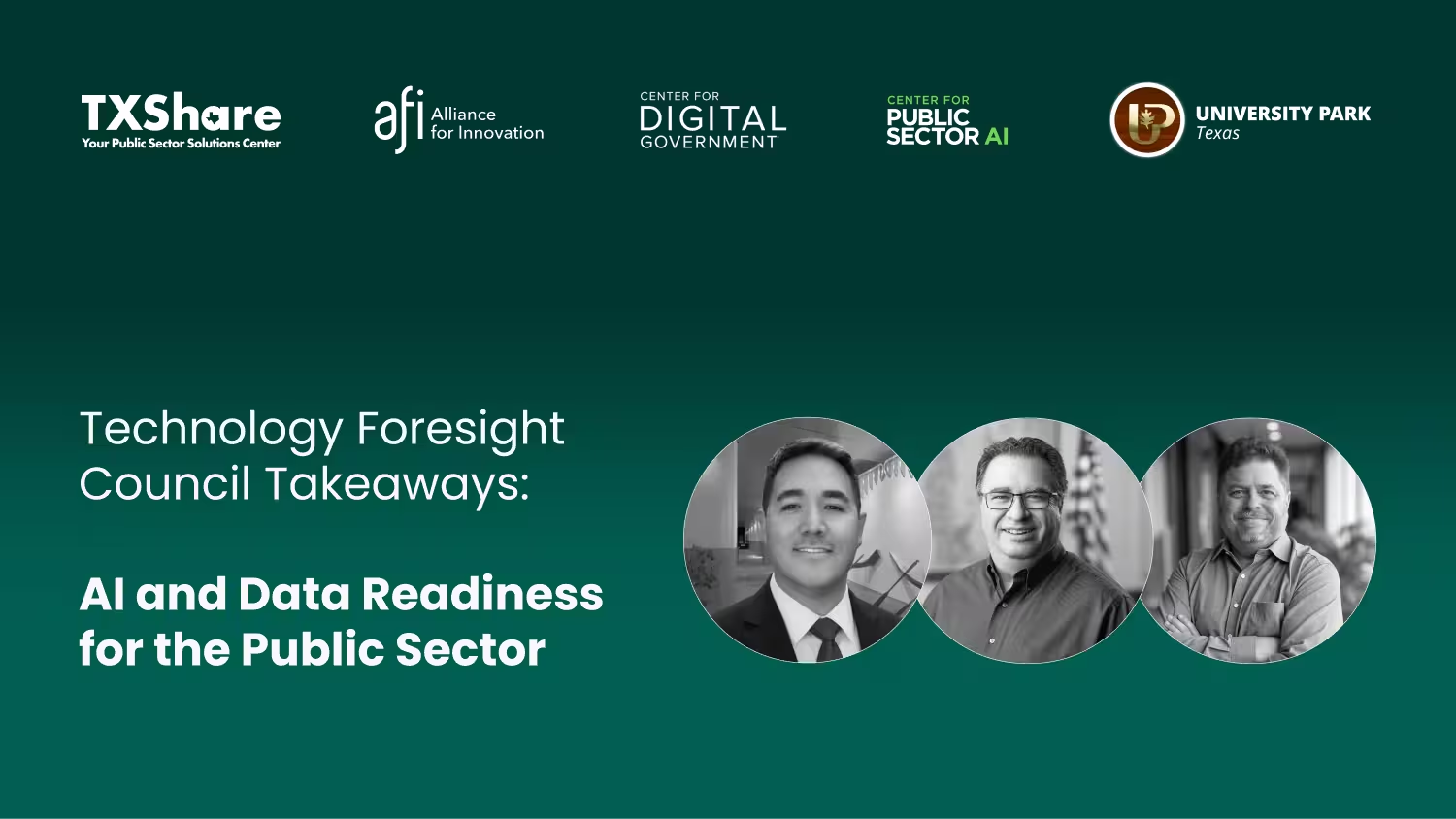
Table of contents
The Summer Technology Foresight Council session tackled a question a lot of agencies will be familiar with: what does getting your data “ready for AI” require in practice?
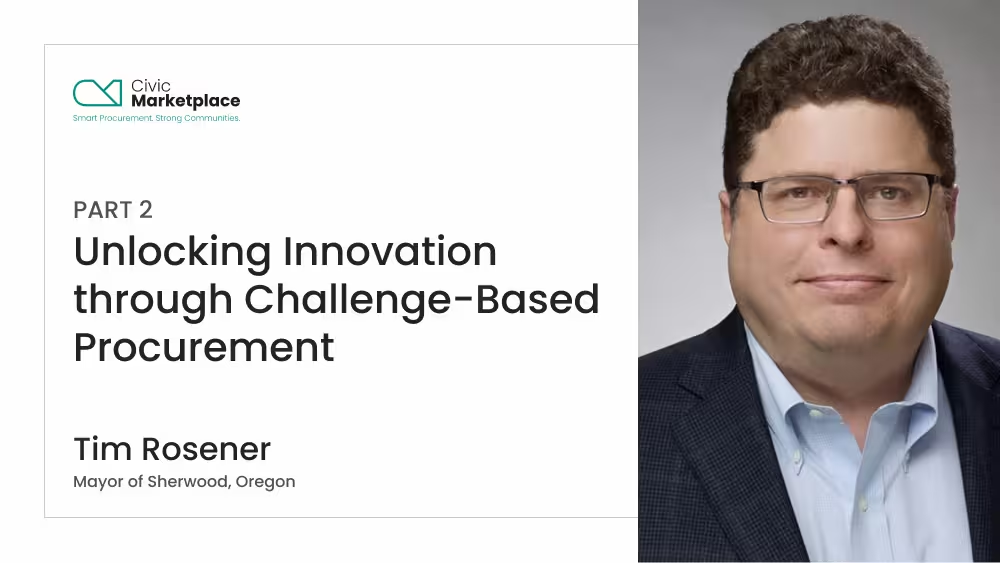
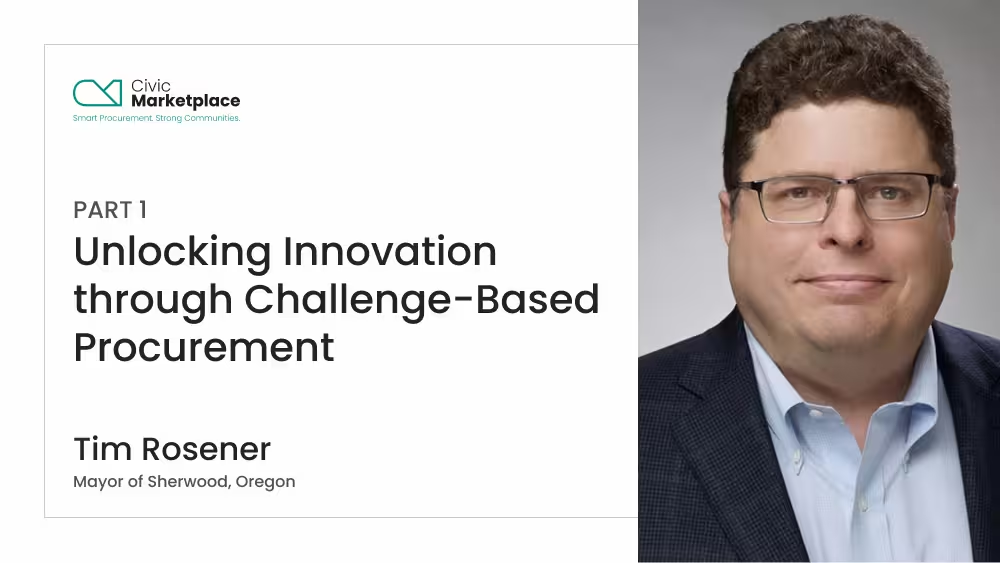
Hosted by Jonathan Blackman, Assistant Director of Agency Administration at NCTCOG, and moderated by Tim Rosener, Mayor of Sherwood, Oregon, the session took a national view of where AI adoption stands today as well as a close-up look at how one Texas city solved a real compliance problem.
Rob Lloyd on scope over scale
Rob Lloyd, Executive Director of the Center for Public Sector AI and the Center for Digital Government, described a shift in maturity: the first 500 to 600 days after generative AI tools broke through were largely a “demonstration and performance” phase, he says, but in the 12 to 16 months since, agencies have become considerably more disciplined – clearer alignment to priorities, defined value goals, and clear criteria for when to walk away from initiatives that aren’t delivering.
Lloyd, who brings close to three decades in local government to the table, including a stint as CTO of the City of Seattle, pointed to the Center’s recently announced AI 50 Awards, benchmarked alongside its Digital Cities, Counties and States Awards – which drew nearly three times as many applicants as the prior cycle, as evidence of how much more seriously agencies are now engaging with AI.
What still needs work, he said, is trust, which has to be built at three levels at once:
- With staff, who use AI heavily but lack clarity around what it means for their jobs;
- With communities, who can reject tools that feel imposed rather than offered;
- With vendors, since Lloyd estimates nearly 90% of service contracts now carry some AI component.
He closed by pointing out that none of this year’s AI 50 winners credited their success to an exhaustive data strategy, but to being “roughly right and useful now” instead of waiting to be perfect later.
Case Study: University Park's six-week fix
Andy Atencio, Director of Information Services for the City of University Park, Texas, showed what that scoping principle looks like in practice, through one specific compliance problem his team solved.
New federal legislation shifted responsibility for reporting exempt overtime from employees to employers starting in 2026. However, the federal FLSA definition of overtime didn’t match the categories University Park pays overtime for, so the city was reconciling the two by hand, in a spreadsheet, every payroll cycle.
Rather than replace its entire ERP system, the city partnered with Phoenician LLC, a systems integrator it was connected to through an existing TXShare cooperative agreement – meaning no new solicitation was required.
The tool they built, nicknamed the Generosity Ledger, pulls payroll data, reclassifies it against FLSA rules, and produces an audit-ready overtime figure for every employee. Atencio demo-ed a gap of roughly $600,000 year-to-date between what the city pays in overtime and what qualifies under FLSA, which the tool resolves.
The project moved quickly: roughly three weeks to scope and contract, six weeks from kickoff to live production payroll cycle. Atencio credited that speed to a tightly defined outcome – one validated number, for one box, on one form – that left no room for scope creep.
The technical part was straightforward, he said, but “the heavy lifting was getting people … to understand that there's potentially a different way of doing things.” Once they’d convinced the payroll clerk who’d done the calculation by hand for the past 18 years, the project moved quickly, and she ultimately gave the project “two thumbs up”.
Key takeaways from the Q&A
- A precise goal keeps scope small. Because the target was one validated number for one box on the W-2, Atencio said the team only needed to verify three specific fields in their ERP, rather than auditing the whole system.
- Shadow AI needs enablement, not just enforcement. Lloyd pointed to better monitoring tools, making the approved option the easiest one, and learning from each other through shared groups like the Gov.AI Coalition – something he said didn’t happen as often with previous technology shifts.
- Higher stakes call for more human review. The riskier the AI-assisted decision, the more oversight it should get, which is a distinction that increasingly shows up in vendor contracts, says Lloyd.
- The system runs entirely in house. Atencio credited the on-premises setup with giving his team control over the data, which made it easier to pull the records Phoenican needed for the build, though he acknowledged that formal governance policy for this kind of project is still catching up.
Join the Technology Foresight Council
The TFC is a collaborative initiative led by the Alliance for Innovation (AFI), the North Central Texas Council of Governments (NCTCOG) and TXShare, with support from Civic Marketplace. It is a forum for exploring the future of government and technology, shaping procurement pathways, and amplifying transformative ideas through collaboration between the public sector, private innovators, and AI-driven thought leadership.
Register your interest to be notified about upcoming TFC events, and gain insight into live case studies and inspiring collaborations between local governments and today’s tech innovators.


View the Coop Contract
Check out this contract and the supplier on Civic Marketplace.



.avif)






.avif)


.avif)