How the City of San Antonio Achieved 206% ROI on Utility Assistance Applications in Year One
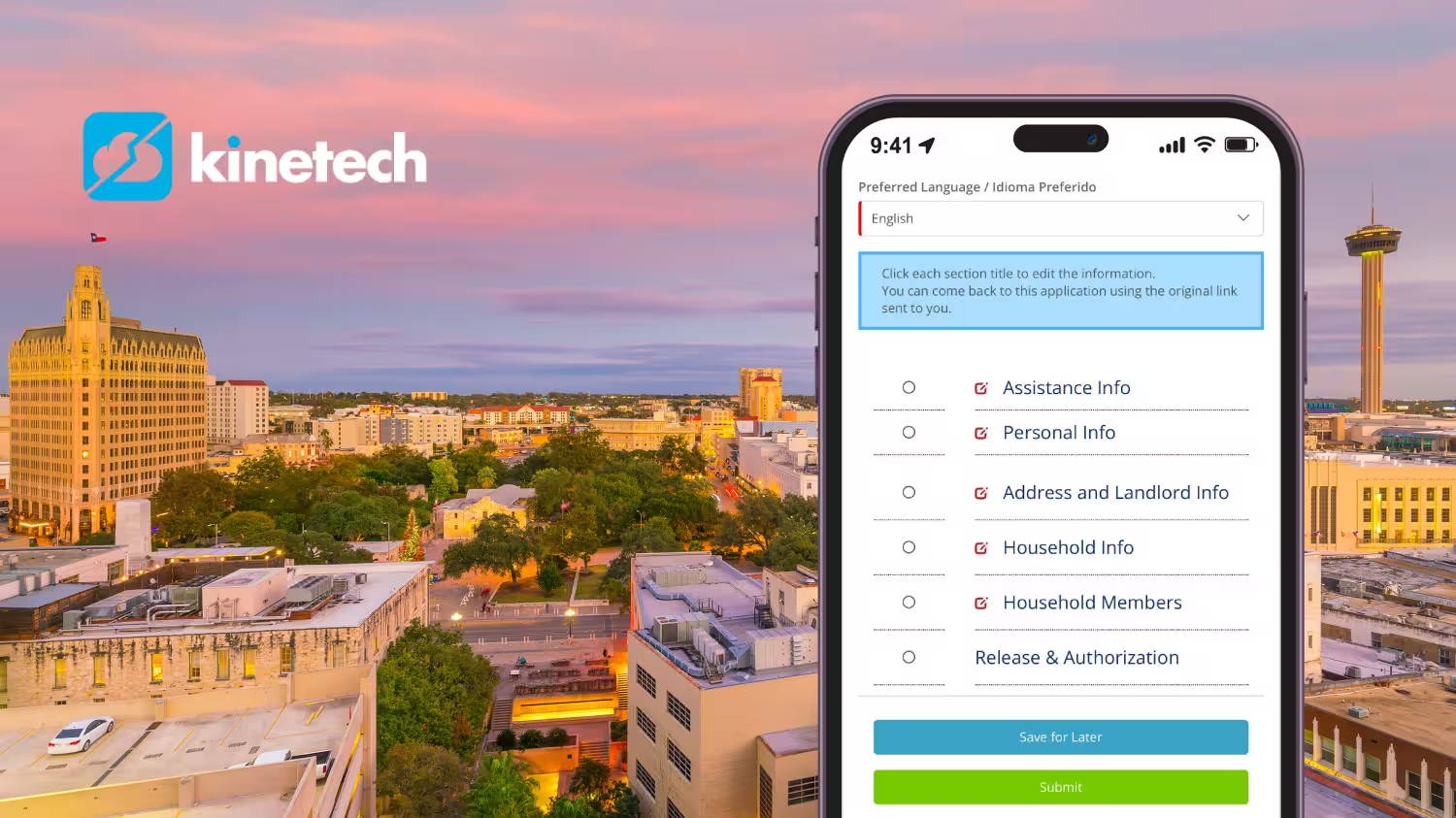
Table of contents
The City of San Antonio is the second-largest city in Texas, home to nearly 1.5 million residents with a median household income of $55,084. The city's Department of Human Services administers the federally funded Low Income Home Energy Assistance Program (LIHEAP), which provides utility payment relief to residents at or below the federal poverty line. Demand peaks during San Antonio's extreme summer heat, when the risk of utility disconnection is highest for the households the program serves.
DHS's opportunity to modernize its process came through CivTech SA, a public call for local technology solutions to municipal challenges championed by then-City Manager Sheryl Sculley. Kinetech responded to a DHS-specific challenge, digitizing utility assistance applications and status tracking, and was selected to replace the department's paper-based process with a digital, self-service alternative.
Results & Impact
First-Year Outcomes
- 206% return on investment
- Applications processed rose from fewer than 7,500 the prior year to more than 13,000
- Achieved with no increase in DHS staffing
Operational Outcomes
- Deployed in six weeks, on a constrained budget
- Fully self-service: residents apply, upload documentation by phone photo, and track status without staff intervention
- Automated notifications whenever an application's status changes
- Available in English and Spanish
- Removed the estimated $20+ per-application cost of applying in person (travel, printing, and lost wages), including the risk of repeating that cost if paperwork was incomplete
The Challenge
San Antonio's DHS provided emergency electric and water assistance thousands of households each year, with demand concentrated around summer heat waves when disconnection risk is highest. Getting that support to residents meant an entirely paper-based process: applicants had to download an application from the city's website, print it, gather supporting documentation, and travel to a physical office during business hours to submit it in person.
That process created real financial barriers for the population it was meant to serve. Kinetech estimated the cost of simply applying (bus fare or gas, photocopies, and potential lost wages from missing work) at around $20, money that low-income applicants seeking utility assistance could rarely spare. If any documentation was missing, the applicant had to repeat the entire trip.
On the city's side, staff had to manually sort every paper application, then call each applicant to request missing information and communicate status, a slow, resource-intensive process operating under real budgetary and legal constraints.
The Solution
Kinetech's team took on the DHS challenge on a six-week timeline and a tight budget, deploying a secure, mobile-first application, built by Kinetech on Mendix, purpose-built for utility assistance.
Residents can securely authenticate, apply for support, and submit all required documentation, entirely online.
The application tracks status in real time, sends automated notifications when that status changes, and is available in both English and Spanish to reach the widest possible share of San Antonio's population in their preferred language.
Within weeks, DHS's utility assistance process went from entirely paper-based to entirely self-service.
Access This TXShare-Awarded Contract Now on Civic Marketplace
Agencies can view Kinetech's full storefront, contract documentation, and service offerings at app.civicmarketplace.com/suppliers/499/kinetech-cloud-llc.

Replicability for Other Agencies
The DHS engagement is a useful reference point for any agency still running eligibility or benefits programs (energy assistance, housing support, transportation subsidies, and similar case-managed services) through manual, paper-based applications.
Kinetech's Conductor platform is designed to configure to a specific program's eligibility rules and documentation requirements rather than requiring a fully custom build, which is part of how the San Antonio deployment moved from challenge to live application in six weeks.

View the Coop Contract
Check out this contract and the supplier on Civic Marketplace.


.avif)









.avif)