Civic Marketplace: changing how cities buy and manage Suppliers

Table of contents
Civic Marketplace puts competitively awarded cooperative contracts and pre-vetted Suppliers in one place. It is a venture-backed AI procurement platform built for local governments, and it is free for every state, local, and education (SLED) Entity to use. On it, buyers compare Suppliers, request quotes, keep documentation, and award with an audit trail. Its connectors bring the same data into ChatGPT, Claude, and Microsoft Copilot.
What changes for a city buyer
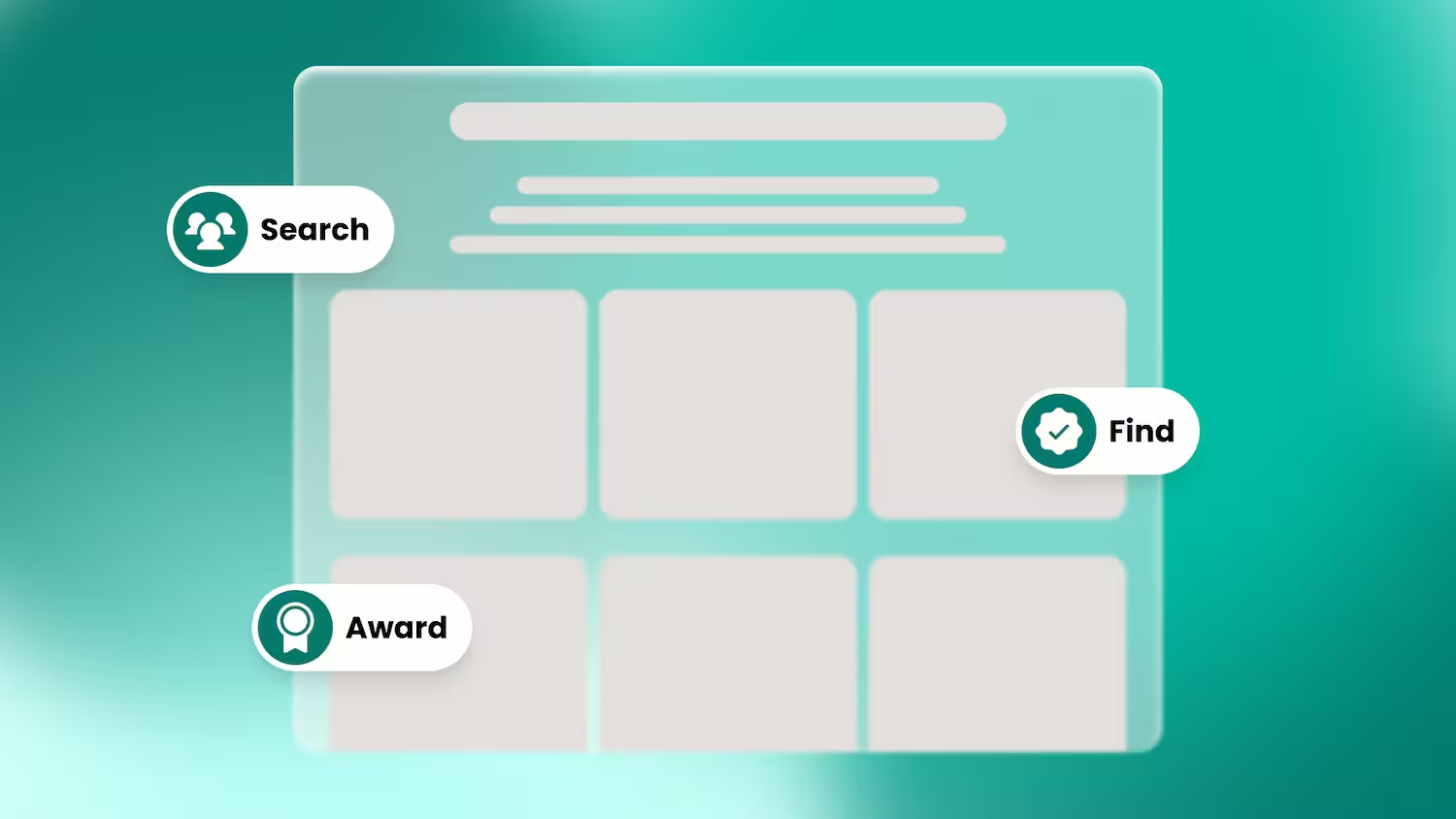
A city buyer starts from pre-vetted and pre-bid Suppliers and finishes with an award that includes its documentation and decisions.
Pre-vetted Suppliers
Civic Marketplace gives you a network of pre-vetted Suppliers, so sourcing does not start from scratch. You reach them in a few clicks, without waiting on a lengthy RFP cycle.
Quotes and files together
You compare Suppliers and send quote requests from the same workspace that holds the documentation. Quotes, attachments, and Supplier details sit side by side, and any questions you ask about a quote stay with it.
Awards that leave a record
Civic Marketplace builds transparency and auditability into the award step. Documentation and decisions are included with the award, so the purchase stays audit-ready.
Inside your AI assistant
Since August 2026, Civic Marketplace connectors built on the Model Context Protocol have put its contract and Supplier data inside Claude, ChatGPT, and Microsoft Copilot.
Contracts found from a chat
From the assistant, you search active contracts by keyword, cooperative, Supplier, or service category. You read the underlying RFPs, pricing sheets, and master service agreements, then send quote requests one at a time or in bulk.
Your permissions still apply
You sign in with your own Civic Marketplace account, and the connector works strictly within the permissions that account already holds. Actions that commit your organization need explicit confirmation before they are sent. Every action is recorded in the Civic Marketplace audit trail.
Setup
Setup needs no download and no API key, and nobody writes code. If your organization manages its AI tool centrally, your administrator may need to switch custom connectors on first.
A read-only API
Teams that build their own tools use the Civic Marketplace API. It gives read-only access to cooperative purchasing contracts, Suppliers, and reference taxonomy data for dashboards and internal applications.
Supplier management by profile
Civic Marketplace handles Supplier management through structured profiles that buyers filter.
You source Suppliers by location, service, or certification, including Historically Underutilized Business (HUB), Women-Owned Small Business (WOSB), Service-Disabled Veteran-Owned Small Business (SDVOSB), Disadvantaged Business Enterprise (DBE), and Minority Business Enterprise (MBE). Each profile carries services, states served, certifications, capacity, lead times, and National Institute of Governmental Purchasing (NIGP) codes, and Suppliers keep those details up to date through the same connectors. Each certification comes from the program that issues it, not from Civic Marketplace.
Cooperative contracts first
Civic Marketplace lets a city buy through contracts another public agency has already competitively awarded, instead of running its own solicitation for every purchase.
TXShare and AFI contracts
TXShare members find and compare TXShare Cooperative Contracts on Civic Marketplace. Through the TXShare site, members can also build a customized procurement profile on Civic Marketplace and search the services and products TXShare has awarded.
The North Central Texas Council of Governments (NCTCOG), which runs the TXShare Cooperative Purchasing Program, and the Alliance for Innovation (AFI) have executed a mutual reciprocity agreement. Active membership in either network grants full access to both portfolios, with no additional interlocal agreement required.
What federal rules say
For federally funded purchases, 2 CFR 200.318(e) says "When appropriate for the procurement or use of common or shared goods and services, recipients and subrecipients are encouraged to enter into State and local intergovernmental agreements or inter-entity agreements for procurement transactions." Finding a contract is still not a compliance decision. Your Entity still needs to confirm it is eligible, that the contract's scope covers the purchase and, for federal funds, that the contract was procured under 2 CFR 200. TXShare states that each of its contracts was.
Startups reaching cities
Civic Marketplace gives startups a procurement path into cities through an Innovation Lane, announced with CivStart Ventures on November 5, 2025.
An Innovation Lane
The Innovation Lane features startups vetted through CivStart Ventures' public-sector review and awarded cooperative contracts. Because each of those startups already holds a cooperative contract, a city that is eligible to use that contract can buy from them without running its own solicitation. "Cities deserve the best solutions, and startups deserve a fair shot," said Al Hleileh, CEO and Co-Founder of Civic Marketplace.
Shared vetting standards
Civic Marketplace's partnership with CivStart formalizes joint standards for risk disclosure, due diligence, and performance verification, so startups in the Innovation Lane meet technical and financial readiness benchmarks. "Our mission at CivStart Ventures has always been to bridge the gap between innovative startups and government," said Anthony Jamison, CEO of CivStart, in the same announcement.
Who uses Civic Marketplace
Public buyers across Texas use Civic Marketplace for cooperative and small purchases.
- NCTCOG: NCTCOG and its TXShare Cooperative Purchasing Program collaborate with Civic Marketplace to put TXShare Cooperative Contracts in front of member agencies.
- City of Dallas: Dallas partners with the Alliance for Innovation and uses Civic Marketplace as its official platform to help other public Entities discover the contracts it has awarded and its Suppliers.
- City of Brownsville: Brownsville partnered with Civic Marketplace to launch the First Quote Program, which connects local businesses with City departments seeking quotes below formal bidding thresholds.
- Upper Guadalupe River Authority (Kerr County): In March 2026 the authority bought flood warning sirens under the TXShare Public Hazard Alerting System contract, which is available through Civic Marketplace, reaching a pre-qualified Supplier at pre-negotiated pricing.
Backing and security
Civic Marketplace is venture-backed and independently examined for security. Kindred Capital led its seed round, and Civic Marketplace, Inc. has completed its SOC 2 Type II examination, conducted in accordance with the American Institute of Certified Public Accountants (AICPA) Trust Services Criteria.
Piloting it in your city
A pilot is safest when it starts with one purchase category and a complete file.
- Confirm membership. Make sure your Entity belongs to TXShare or AFI before relying on their contracts.
- Check the award. Read the lead agency's solicitation and award documents for the contract you plan to use.
- Try one category. Run a single category through Civic Marketplace and set the results against your usual process.
- Keep the file. For federally funded purchases, 2 CFR 200.318(i) says "The recipient or subrecipient must maintain records sufficient to detail the history of each procurement transaction."
Book a demo of Civic Marketplace to walk through one purchase in your own category.

References
- Civic Marketplace. "Schedule your personalized Civic Marketplace demo." https://www.civicmarketplace.com/book-demo
- TXShare. "Our Connection to Civic Marketplace." https://www.txshare.org/home/civic-marketplace-landing-page
- TXShare. "Home." https://www.txshare.org/
- City of Brownsville. "First Quote Program | Brownsville, TX." https://www.brownsvilletx.gov/2598/First-Quote-Program
- eCFR. "2 CFR 200.318 -- General procurement standards." https://www.ecfr.gov/current/title-2/part-200/section-200.318