The Startup Guide to Cooperative Contracts and Scaling Into Government Procurement

Breaking into government purchasing can unlock an easier path to sales, recurring revenue, long-term customers, and real-world impact for startups building technology that serves communities – that is, if startups choose procurement paths that scale.
Government buying in the United States spans over 90,000 high-spending state and local government entities, each with its own rules, timelines, and risk constraints. That variation and fragmentation, combined with procurement processes that can be complex and difficult to maneuver, mean early-stage companies often fail to break into this lucrative market.
“Selling into state [and] local government in the U.S. is structurally broken for early-stage companies.” — Anthony Jamison, CivStart
With insights from Anthony Jamison, cofounder and CEO of CivStart, and Marcheta Gillespie, procurement expert and President of NIGP Code & Consulting, this guide focuses on cooperative contracts as a scalable route into winning public sector customers.
Cooperative contracts allow one competitively awarded procurement to be leveraged by multiple buyers, giving startups a way to expand adoption without restarting the process each time.
RFPs Are a Dead End for Most Startups
.avif)
Formal Requests for Proposals (RFPs) are at the core of government procurement; they’re also one of the least effective entry points for early-stage companies.
RFPs are designed to create fairness, consistency, and defensibility in public spending – they standardize evaluation and minimize perceived risk. However, in practice, this structure tends to favor suppliers with long track records, multiple references, sufficient resources and procurement knowledge, and dedicated procurement teams.
Early-stage companies don’t have the history, resources, or internal capacity to meet these requirements. Compounding the challenge, government sourcing timelines routinely stretch 12-18 months or longer, and the feedback loop for startups is slow. This means losing a bid rarely offers any actionable insight, making for a costly and frustrating learning process.
“RFPs are designed to reduce risk and not discover innovation.” — Anthony Jamison, CivStart
By the time an RFP is published, entities have already defined the problem they want to solve, identified budget and risk constraints, and may have translated some of those decisions into fixed requirements. This leaves little room for startups to influence outcomes or pitch a different approach for better results. “Government is hard to sell into,” says Jamison. “You’ve got to figure out who owns a problem, what’s urgent, what’s funded, what procurement path is realistic – and most teams waste months chasing noise.”
Startups can get an edge by reaching entities earlier, when they are still exploring problems and deciding what and how they want to buy, Jamison explains. “I always tell startups, if you’re responding to an RFP, you’re already too late. You want to get to the government or get to your customers before an RFP ever hits the market.”
.avif)
How Cooperative Contracts Streamline Procurement
Cooperative contracts emerged to reduce duplication and leverage scalability in spend in public-sector purchasing. Instead of requiring every government entity to run separate procurement processes for the same product or service, cooperative contracts allow one compliant procurement contract to support multiple buyers.
A cooperative contract does still require startups to compete for and win an RFP, but as Jamison explains, “Cooperative contracts let you do the hardest procurement work once and reuse it many times.”
Through a cooperative contract, government entities can rely on shared vetting, pricing justification, and compliance review. For startups, this route reduces the need to repeat the same process across multiple jurisdictions with different sets of requirements.
"Government leaders also don't like going through full procurement. Cooperative contracts remove one big barrier to innovation for both sides." — Anthony Jamison, CivStart
While cooperative contracts streamline procurement timelines, they aren’t a replacement for sales, relationships, and generating demand – those remain essential parts of the go-to-market process. But by removing repetitive procurement work, cooperative contracts free up startups to refocus their efforts on those critical areas.
Cooperative Contracts are a Growth Strategy
Cooperative contracts are a powerful growth and distribution strategy in government markets, not a procurement shortcut. Government entities often look to peers when evaluating solutions, so shared contracts make it easier for entities to follow proven paths and quickly overcome internal uncertainty.
“One contract can unlock access to many entities, and what it does in turn is create inbound interest, and it also establishes that market credibility for you,” explains Jamison. “So, over time, that contract becomes a trusted signal … When referrals start compounding, that really shortens the future sales cycle for you.”
“Governments like to see what their peers are doing. Governments never like to be first. They like to be second.” — Anthony Jamison, CivStart
Through cooperative contracts, startups can reach clusters of similar buyers using a shared procurement framework, building the credibility and legitimacy to compete with incumbent suppliers.
Why Entities are Increasingly Incentivized to Buy From Startups
As well as resident service and efficiency, government entities are increasingly motivated by resilience, competition, and long-term sustainability when deciding how to buy and from whom.
“One of the most significant lessons reinforced during the pandemic was the risk inherent in relying on a narrow or overly concentrated supplier base,” explains Marcheta Gillespie, procurement expert and president of NIGP Code & Consulting. “Organizations that depended on one or a handful of long-standing suppliers often found themselves vulnerable when supply chains were disrupted.”
Entities that had intentionally diversified their supplier portfolios were better positioned to adapt. By cultivating newer supplier relationships and creating pathways for emerging suppliers, they had more flexibility at moments when incumbents were unable, or unwilling, to respond.
Beyond risk mitigation, startups are increasingly attractive because they are often purpose-built to address emerging public sector challenges. “Government entities are increasingly tasked with solving complex, evolving problems – whether related to technology, sustainability, cybersecurity, or service delivery – that do not always lend themselves to traditional solutions,” says Gillespie.
As a result, governments are beginning to recognize that creating opportunities for startups is no longer just about supporting small or emerging businesses.
“It is a strategic procurement decision,” says Gillespie. “By engaging startups alongside established suppliers, entities strengthen competition, reduce systemic risk, and position themselves to access the innovative solutions required to meet future public needs.”
Why Government Entities Use Cooperative Contracts
For government entities, procurement decisions are ultimately about managing risk while delivering results. Before any purchase can move forward, entities need confidence in the process, the supplier, and the decision itself.
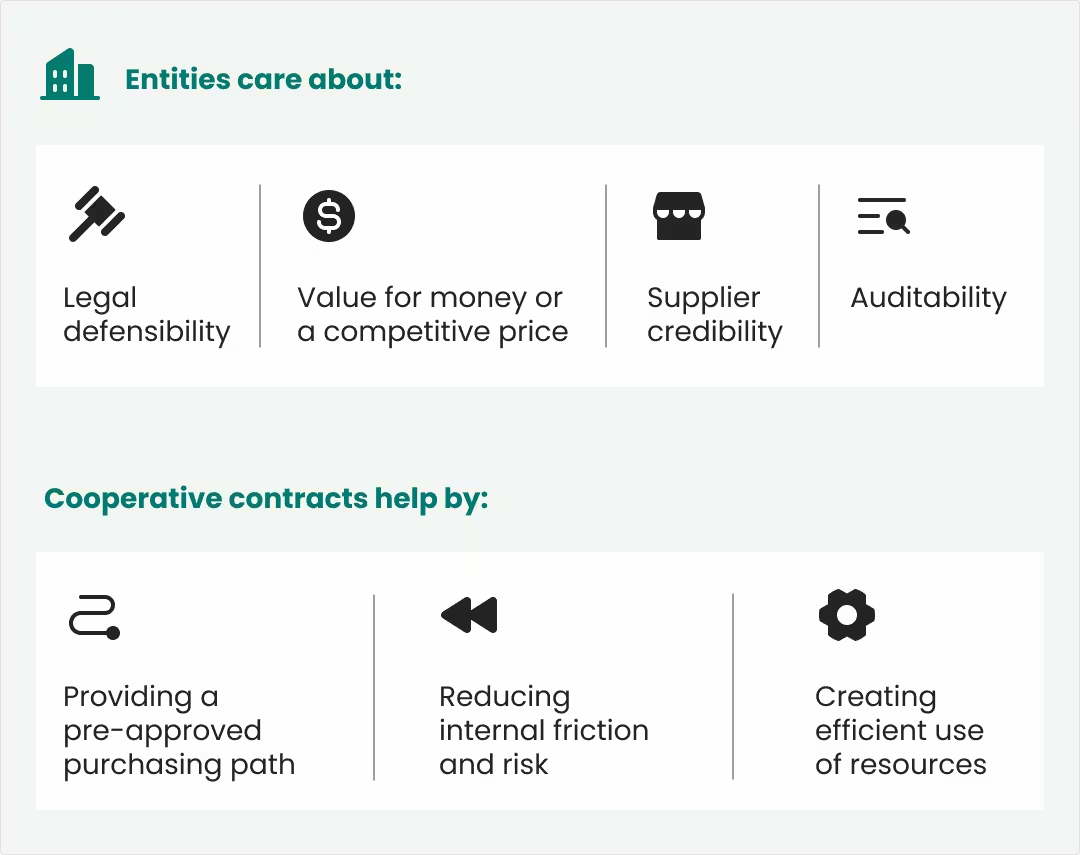
operative contracts serve as a governance and risk-management tool, allowing entities to benefit from shared due diligence while maintaining accountability for how public funds are spent.
“Even when an entity utilizes a cooperative contract, it must still confirm that the underlying solicitation was conducted in accordance with its own regulatory framework, that the contract scope aligns with its operational needs, and that pricing, terms, and performance standards are appropriate,” Gillespie explains.
This review burden often causes government purchases to stall, as Jamison points out. “This is usually where deals die, if a government doesn’t know how to buy from you. A cooperative contract streamlines all that and gets you past all of the bottlenecks that are in this process.”
In practice, cooperative contracts fast-track complex internal workflows (legal review, procurement sign-off, compliance checks), reducing uncertainty and giving entities “permission” to buy.
Not All Cooperative Contracts Are Equal
Winning a cooperative contract is only the beginning; the real strategy lies in selecting which government entity or cooperative to lead with, as some enhance credibility and accelerate adoption more effectively than others.
“A win is a win regardless, but some contracts just travel much further than others.” — Anthony Jamison, CivStart
- Identity of the lead entity shapes perception of the contract
“A contract that’s held by a respected, operationally mature entity or a widely used cooperative really carries more credibility than these smaller, obscure ones. Entities that are known for strong procurement practices or innovation leadership tend to generate more downstream interest,” explains Jamison.
That distinction is deliberate, says Gillespie. “Not all entities are well positioned to serve as lead entities for cooperative contracts … Successful cooperative contracting requires strong governance, capable leadership, regulatory alignment, and institutional maturity.”
- Scale, exposure, and readiness
Larger national government procurement cooperatives often offer significant exposure and purchasing power, making them attractive to startups that want to scale quickly. But that scale brings higher expectations and puts pressure on small businesses. “For startups or smaller firms, meeting these requirements can be challenging and, in some cases, financially risky,” says Gillespie.
Smaller or entity-run cooperative organizations, such as regional or sector-specific programs like TXShare, often operate at a more manageable scale. “Their volumes, geographic reach, and service expectations may be better aligned with the capabilities of startups and small to mid-sized businesses,” Gillespie advises. “These programs may also offer greater access to decision-makers, more collaborative relationships, and increased opportunities for supplier engagement.”
Many of these programs are “intentionally focused on expanding supplier diversity, supporting local and emerging businesses, and fostering innovation,” adds Gillespie, which often makes them more receptive to startups – as long as they demonstrate reliability, compliance, and long-term viability.
- A phased approach to building credibility can be effective
“For many startups and emerging firms, the most effective approach is a phased strategy, beginning with smaller or mid-sized cooperatives that align with their current capabilities, while intentionally preparing for participation in larger programs as their infrastructure and market presence mature,” advises Gillespie.
This means being selective about where you first try to win and activate a cooperative contract. Smaller or regionally focused cooperatives tend to work with entities that are more open to piloting new suppliers, which enables suppliers to build the performance history, references, and proof that larger national programs expect.
“Don’t begin with a contract, begin with buyer behaviour,” advises Jamison. For example, a startup selling a new permitting tool might start with a state-run cooperative already used by mid-sized cities. Those cities are familiar with the cooperative, their procurement teams know how to buy through it, and internal approvals go smoothly. And, once several entities have successfully purchased and deployed the product through that contract, the startup is in a better position to start pursuing larger cooperative programs.
This is why understanding where entities are already comfortable buying matters as much as which contracts are available – cooperative contracts that align with existing purchasing behavior face less internal resistance and are more likely to be used.
How Cooperative Contracts Support Product-Market Fit
Lengthy sales cycles and slow feedback make govtech learning loops long and expensive. Cooperative contracts compress that learning loop by allowing insights from one government entity to inform conversations with others. “Instead of learning from one customer every 12 to 18 months, startups are now learning from multiple buyers operating under similar terms,” says Jamison.
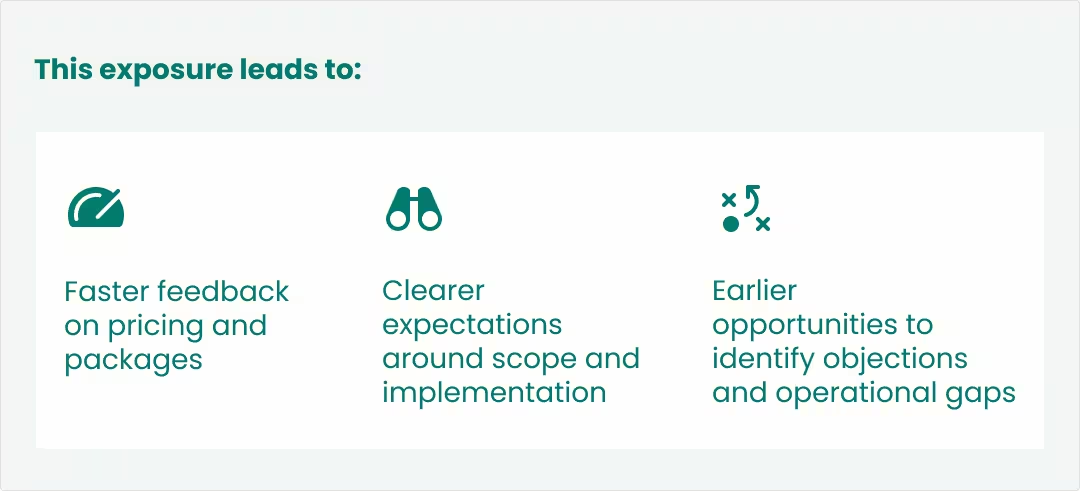
This consistency also reduces risk for government entities: When multiple peer entities use the same contract vehicle, procurement teams can have confidence that the solution, pricing, and process have already been tested in a similar environment.
How to Approach Pricing
Cooperative contracts require startups to think differently about pricing. “Startups should recognize that they’re pricing for a market, not a single customer,” says Jamison. “When you price for a single customer, that means you’re customizing too much, and it’s not going to scale.”
This can mean accepting lower margins in exchange for broader adoption and long-term growth. What matters most is intentional pricing structures that are repeatable and defensible across multiple buyers, adds Jamison. “That’s what I would have in the back of my mind if I’m going through my pricing strategy.”
Founders might worry about being locked into a fixed scope, but that fear is overstated. “Most cooperative contracts allow for expansion through amendments,” Jamison explains. “The constraint isn’t innovation, it’s clarity. Startups usually need to be disciplined about what’s included and what’s optional, and how expansion is structured so procurement teams can remain comfortable.”
Clear pricing, well-defined scope, and transparent terms make contracts easier to evaluate, easier to defend, and easier to reuse.
Compliance, Defensibility, and Audit Readiness Still Matter
A common misconception startups have about cooperative contracts is that they are compliance shortcuts that eliminate the need for rigorous scrutiny.
“While cooperative purchasing is a powerful tool that can streamline procurement timelines and reduce administrative burden,” says Gillespie, “it does not relieve public entities of their responsibility to ensure that contracts are legally sound, properly vetted, and defensible under audit or legal scrutiny.”
.avif)
“Public-sector procurement is compliance-focused,” explains Gillespie. “Government entities must be able to demonstrate that their purchasing decisions were fair, competitive, transparent, and in the best interest of the public. Startups that lack organized records, clear pricing structures, documented compliance processes, or formal quality controls often raise concerns during this review process.”
Credible suppliers distinguish themselves by demonstrating maturity in governance and operations, through:
- Proactively providing complete compliance documentation
- Understanding how their cooperative contract was competitively awarded
- Clearly explaining how pricing and performance will be monitored
A risky supplier is one that:
- Displays gaps in internal controls
- Shows a limited understanding of public procurement requirements
- Has inconsistent reporting practices
- Is resistant to oversight
“Red flags may include vague contract documentation, unclear subcontracting arrangements, unrealistic pricing models, or an inability to articulate how they manage risk, security, and continuity of service,” says Gillespie.
“Cooperative contracts create efficiency – but they do not replace accountability.” — Marcheta Gillespie, NIGP Code & Consulting
How to Market Cooperative Contracts
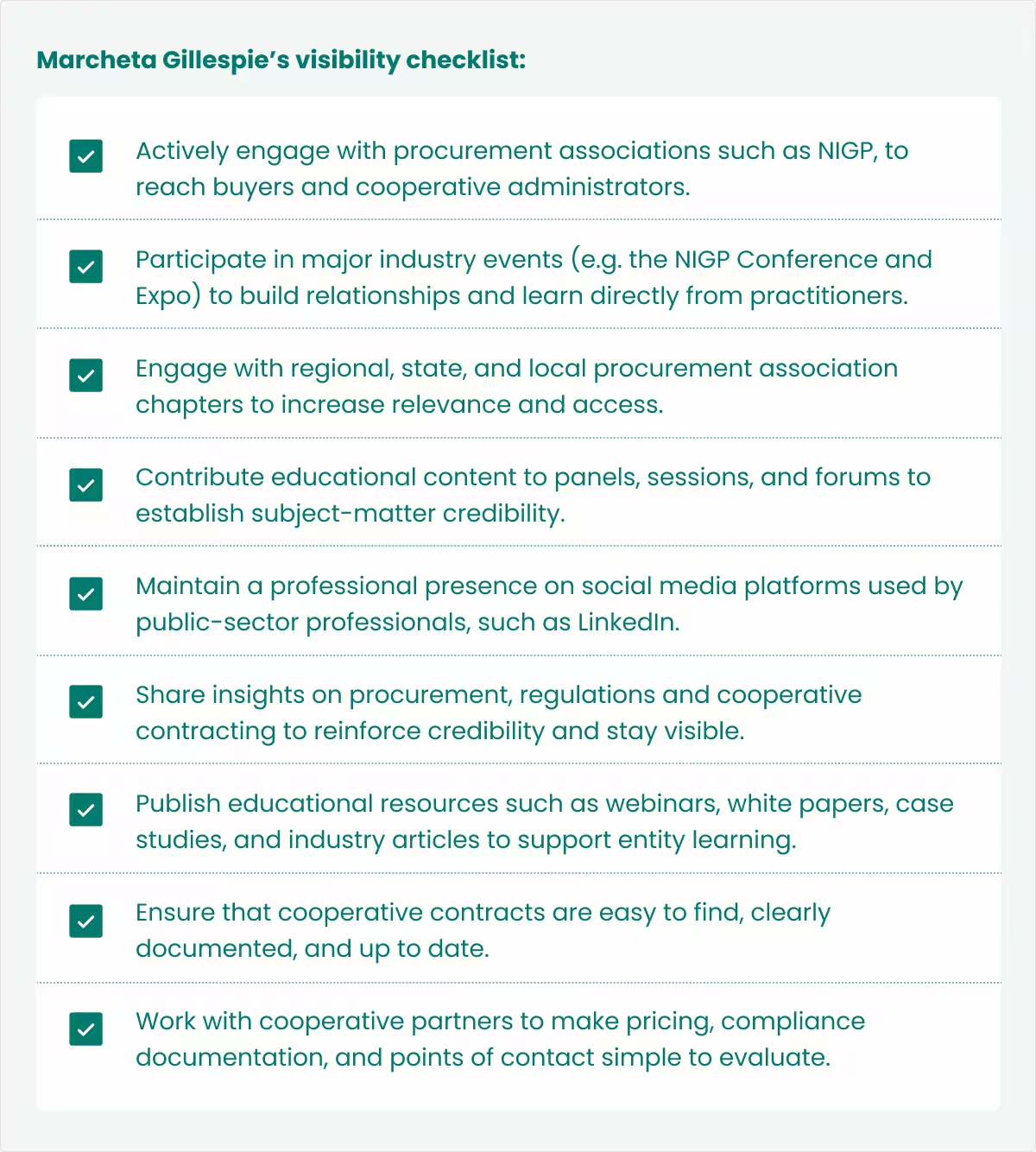
Winning a contract creates permission to buy, but adoption depends on whether entities can easily find your contract, understand whether it fits their needs, and be confident that it will pass internal review before purchasing.
“Put the contract front and center, put it on your homepage, put it in your sales decks and in discovery calls,” advises Jamison. “Be very direct.”
Many buyers are not procurement experts themselves, so explaining how purchasing works reduces friction and builds trust. “You need to explain in plain language how government entities can buy you,” Jamison says. “They appreciate suppliers who make purchasing very easy for them.”
“Entities are far more likely to utilize contracts that are easy to find and simple to evaluate,” agrees Gillespie. “Visibility should be viewed as a long-term investment.” From the government perspective, transparency signals credibility, Gillespie explains. “In the public sector, trust drives utilization. By focusing first on learning, service, and professional engagement, startups can ensure their cooperative contracts are not only visible, but respected and widely used.”
“Startups that consistently show up, contribute to professional dialogue, and demonstrate commitment to the public procurement mission build recognition over time. When education and relationship-building are prioritized, awareness and marketing follow organically.” — Marcheta Gillespie, NIGP Code & Consulting
Choose a Route That Scales
Government procurement will always be complex, but startups don’t succeed by mastering every rule or chasing every opportunity. Success comes from choosing routes that build on past work instead of starting over each time.
Cooperative contracts offer a route that scales. They reduce repetition, accelerate learning, and align procurement with how startups grow while meeting the governance, compliance, and accountability standards that entities require.
About CivStart
CivStart runs a government-controlled discovery process with state and local leaders to surface real operational challenges and clarify priorities – always free for government participants.
For startups, this means access to verified, first-party government signals and buyer-approved introductions, without cold outreach or speculation. Instead of chasing noise, you engage where there is real demand.
If you want to reach governments earlier and more strategically, CivStart provides a structured path in.
Learn more at https://www.civstart.org





.avif)

.avif)